NFL Betting Projections Signal Plateau as Prediction Markets Expand Reach
Casey Walter · Sep 10, 2026

NFL Betting Projections Signal Plateau as Prediction Markets Expand Reach
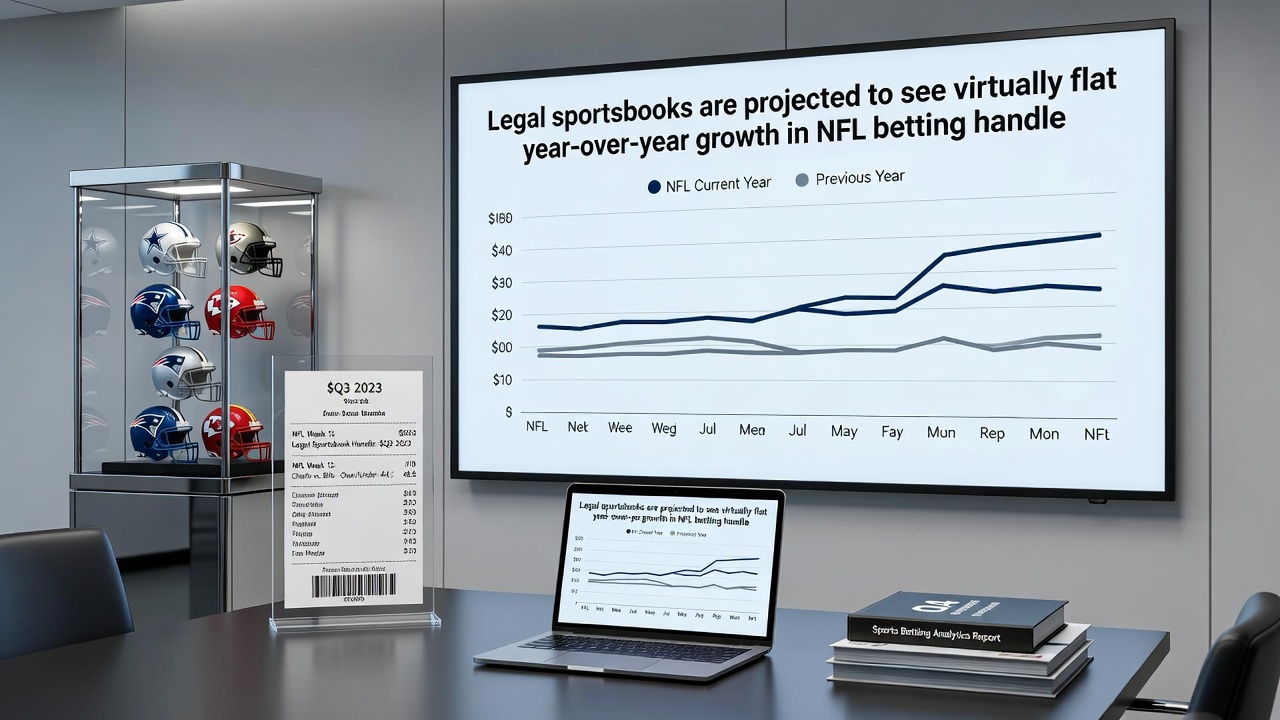
Data from the American Gaming Association places the regulated NFL betting handle at an estimated $29.5 billion for the 2026 season, a total that sits nearly identical to the $29.4 billion recorded the season before and marks the first stall in year-over-year growth since nationwide legalization took hold.
Industry observers point to rising activity on prediction market platforms as the primary factor behind this leveling, with volumes on sites such as Kalshi showing sharp increases that include $41 billion in notional trading during July alone and sports-related contracts accounting for 82.2 percent of that activity.
Market Data and Seasonal Context
Projections released ahead of the 2026 campaign indicate that legal sportsbooks will encounter sustained competition from these alternative venues, which have drawn in younger participants and shifted portions of betting activity away from traditional operators. The figures reflect a broader pattern where prediction markets capture trading interest through event contracts that overlap with NFL outcomes, creating direct alternatives for users who previously placed wagers exclusively through regulated books.
As September 2026 approaches and the new NFL schedule gets underway, analysts note that the near-flat trajectory represents a departure from prior seasons that featured consistent expansion following the Supreme Court decision on sports wagering. Handle totals compiled through the American Gaming Association Commercial Gaming Revenue Tracker form the basis for these estimates, which track statewide reporting from licensed operators across the country.
Competition Dynamics from Prediction Platforms
Platforms operating prediction markets have recorded substantial notional volumes that extend well beyond traditional sportsbooks in certain months, and data shows sports contracts forming the majority share of activity on Kalshi during the cited July period. This overlap pulls participants who seek direct outcome wagers on games, player performances, and season-long results, diverting some handle that would otherwise flow through state-regulated channels.
Some operators have already flagged the possibility of short-term dips in handle before any potential rebound occurs later in the cycle, as user bases adjust to the availability of multiple venues for similar propositions. The shift appears concentrated among demographics that favor the structure and liquidity offered by prediction markets, where contracts can be traded in ways that resemble financial instruments rather than fixed-odds bets.
Implications for Regulated Operators
Legal sportsbooks now face a landscape where total addressable market remains large yet growth in the core NFL segment shows signs of saturation due to these competing formats. The American Gaming Association estimate of $29.5 billion underscores that overall volume has not declined outright but has reached a point of equilibrium rather than continued upward movement seen in earlier years post-legalization.
Operators continue to monitor how prediction market participation influences user retention, particularly as younger bettors experiment with both systems and sometimes split activity across platforms. Figures released in industry reporting highlight that the $41 billion notional on Kalshi during July provides one snapshot of the scale at which these venues operate, with the high percentage tied to sports underscoring direct relevance to NFL betting patterns.
Longer-Term Adjustments in the Sector
While the immediate projection points to flat performance in regulated handle, data indicates that some operators anticipate stabilization or gradual recovery once market participants settle into usage patterns that incorporate both traditional sportsbooks and prediction exchanges. The initial diversion effect appears most pronounced in the early part of the season when new users test alternative platforms before potentially returning to established apps for certain bet types.
State-level reporting requirements remain unchanged, so the American Gaming Association continues to aggregate handle from licensed operators without incorporating prediction market volumes, which fall under different regulatory frameworks in most jurisdictions. This separation keeps the $29.5 billion figure focused strictly on regulated sports wagering activity for the 2026 NFL season.
Conclusion
The current projections establish a clear benchmark where NFL betting handle through legal sportsbooks holds steady near prior levels amid expanding competition from prediction markets. Data compiled by the American Gaming Association supplies the foundation for the $29.5 billion estimate, while trading records from platforms such as Kalshi illustrate the scale of activity drawing users toward alternative venues. As the 2026 season unfolds, these dynamics will determine whether regulated handle remains at this plateau or experiences shifts tied to ongoing platform competition.